Why are scientists returning to psychedelic research?
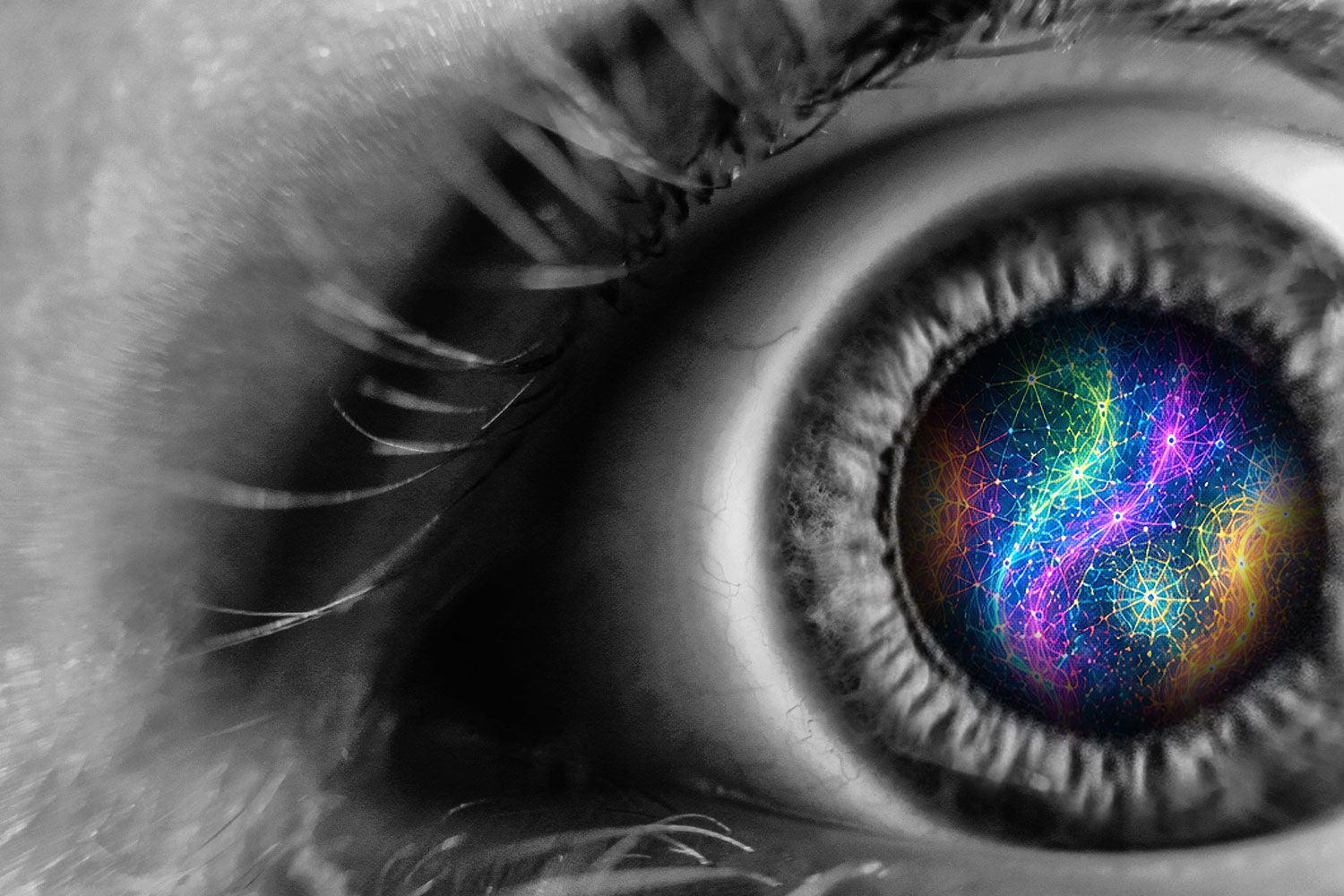
For much of the last half of the twentieth century, research into psychedelic substances was largely missing from mainstream science. Regulatory restrictions, cultural associations and political concerns meant that studies into compounds such as psilocybin, LSD, DMT and MDMA became increasingly difficult to undertake.
You could argue that a backlash in the 60’s, characterised (either fairly or unfairly) with figures like Dr Timothy Leary, where the researcher effectively became the advocate, put back important work with psychedelics by decades. It’s unfair to blame specific people though in what can now be seen as a societal shift in western thinking around psychedelic substances.
Time has passed, and quietly, with renewed academic rigour, meaningful work with psychedelics is progressing.
Across the UK, Europe, North and South America, universities and medical research centres are once again exploring these substances under carefully controlled laboratory conditions. Far removed from recreational use, modern studies employ rigorous scientific protocols, medical supervision and ethical oversight.
One of the principal drivers behind this renewed interest has been mental health. Early clinical studies suggest that psychedelic-assisted therapies may offer significant benefits for some people living with treatment-resistant depression, anxiety associated with life-threatening illness, post-traumatic stress disorder and addiction. While much work remains before these approaches become widely available, the results have encouraged researchers to look more closely at what these substances may reveal about the human mind.
Yet there is another question emerging alongside the medical one.
What can altered states of consciousness teach us about consciousness itself?
This is where neuroscience, psychology, philosophy and phenomenology increasingly begin to overlap.
Modern brain imaging has revealed that psychedelic experiences are accompanied by striking changes in the way different regions of the brain communicate. Networks that normally operate independently begin interacting in new ways, while the brain’s “default mode network” – associated with our sense of self and internal narrative – often shows reduced activity.
These findings have prompted fascinating questions.
Why do many participants report a temporary dissolution of the ordinary sense of self? Why are feelings of interconnectedness so commonly described? How do changes in brain activity relate to deeply meaningful subjective experiences? Can consciousness be understood purely through neural mechanisms, or do altered states reveal aspects of human experience that require broader interdisciplinary investigation?
There are no simple answers.
Importantly, the researchers asking these questions come from many different disciplines. Alongside psychiatrists and neuroscientists are psychologists, philosophers, physicists, anthropologists and scholars of religion. Increasingly, consciousness research is recognising that understanding subjective experience may require perspectives that extend beyond any single field.
Equally important is recognising what this research is not saying.
These studies do not suggest that psychedelic substances are appropriate for everyone, nor should they be viewed as a substitute for conventional medical care. Outside approved clinical settings, many of these substances remain illegal in numerous countries and can carry significant psychological and physical risks. Long gone are the days of “Turn on, tune in, drop out”.
Rather, today’s research reflects a broader willingness within science to investigate questions that were once considered beyond its reach. Advances in neuroimaging, psychology and computational neuroscience now allow researchers to examine altered states with a level of sophistication that simply wasn’t possible a generation ago.
Here at the Centre for Liminal Studies, this represents an exciting opportunity.
The renewed scientific interest in psychedelic research is not simply about developing new treatments. It also reflects a growing recognition that consciousness itself remains one of science’s greatest unsolved questions.
By bringing together neuroscience, psychology, philosophy, contemplative traditions and lived experience, we may begin to develop richer ways of understanding the nature of mind itself.
Perhaps the most important shift is not that science has found all the answers.
It is that science is once again willing to ask some of the biggest questions.
