What happens when we start listening deeply to people who many assume have nothing to say?
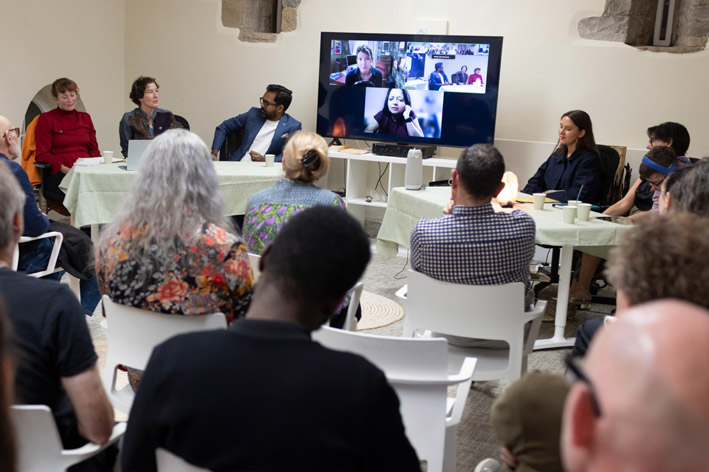
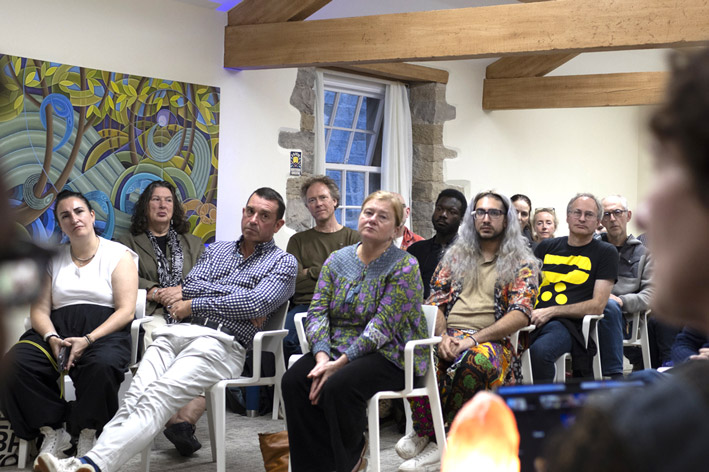
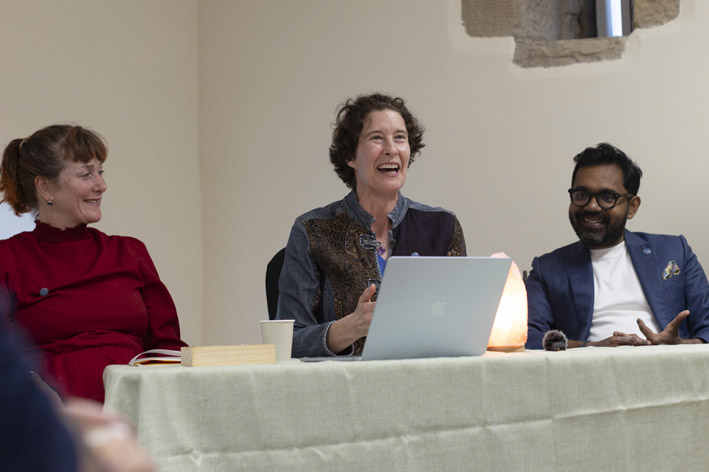
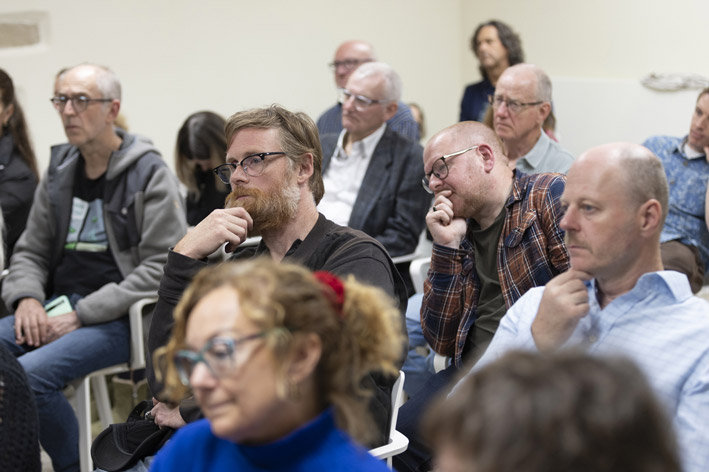
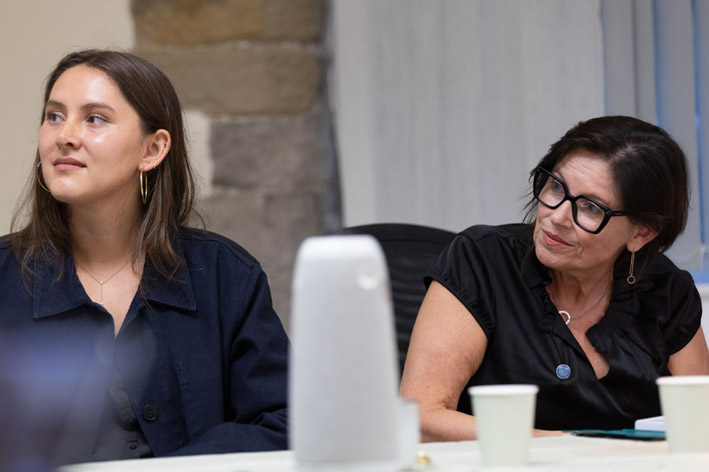
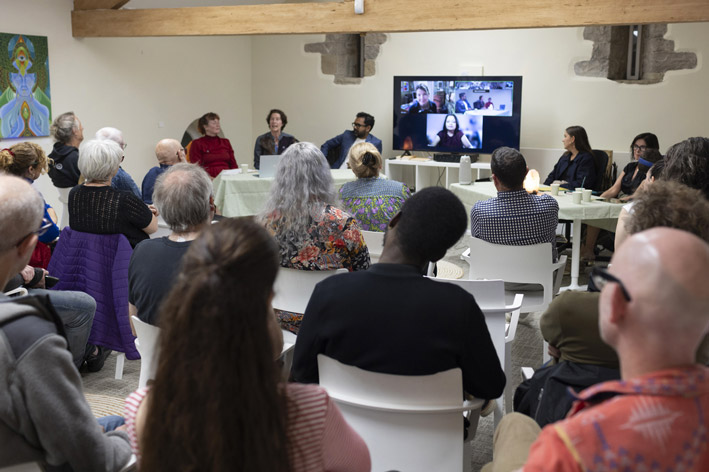
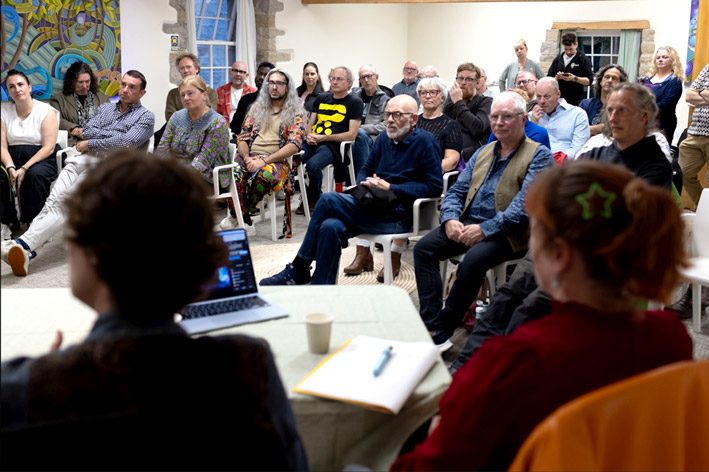
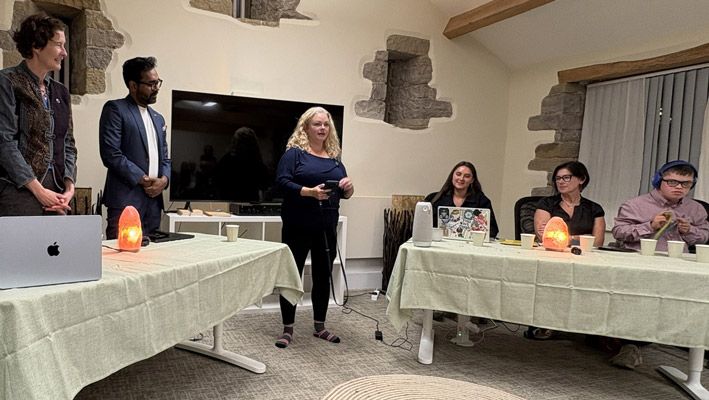
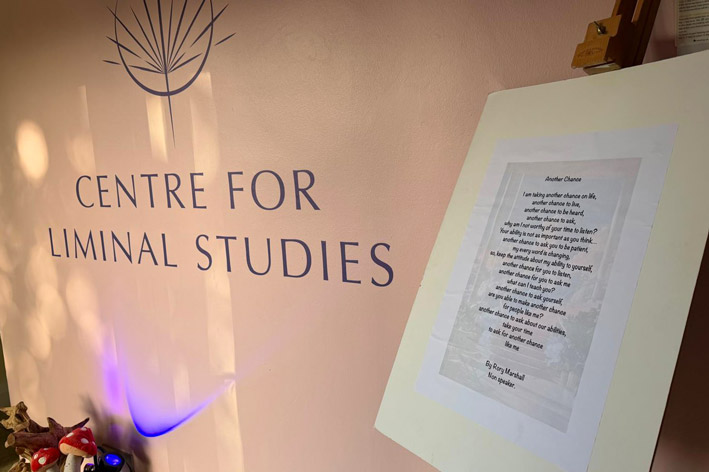
On Tuesday 8th September, the Centre for Liminal Studies hosted a rather extraordinary gathering at Broughton Sanctuary, bringing together people associated with The Telepathy Tapes, non-speakers and their families, researchers, practitioners and others interested in the possibilities – and limitations – of technology and non-local consciousness in fostering deeper human communication.
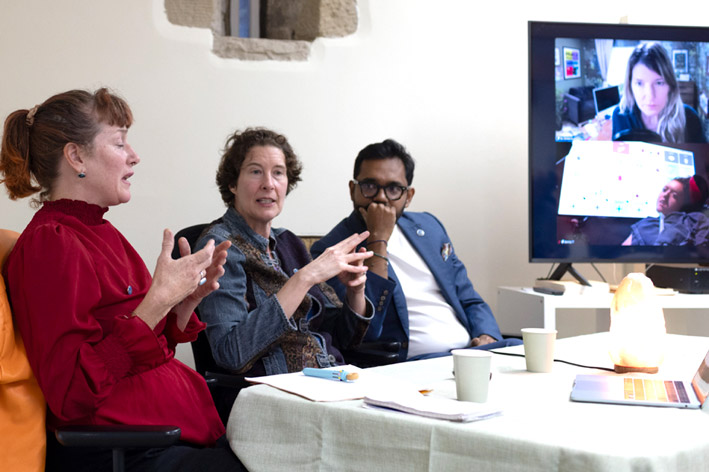
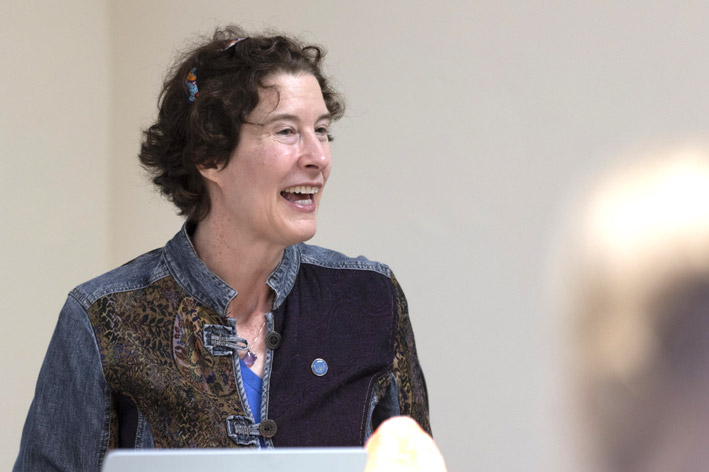
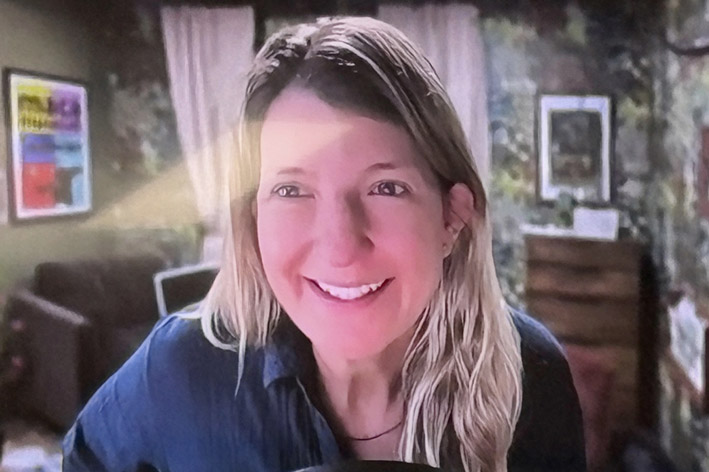
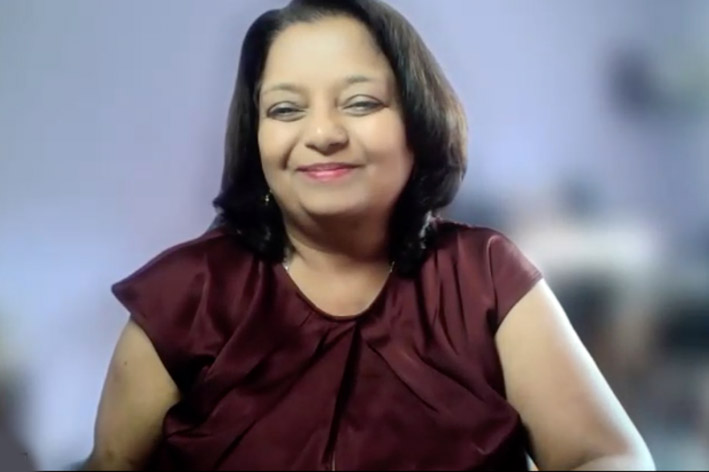
The evening was hosted by Dr Julia Mossbridge of Applied Love Labs, with The Telepathy Tapes creator and filmmaker Ky Dickens joining remotely.
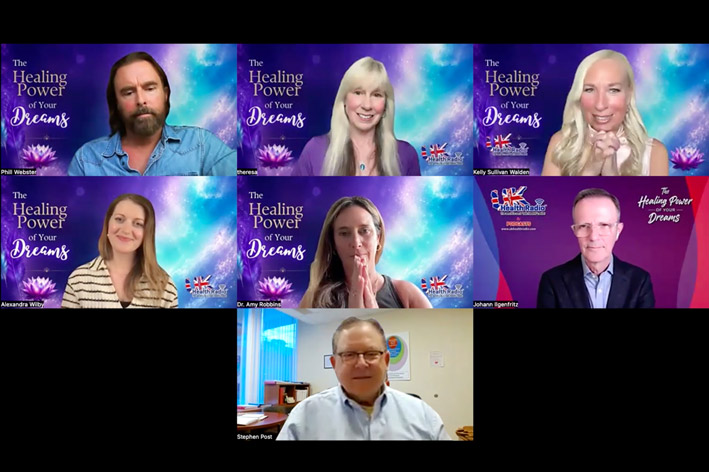
We began experientially, with dreaming experts Theresa Cheung and Dr Kelly Sullivan Walden and members of the UK Health Radio ‘Dream Team’ leading participants through a meditation exploring intuition, connection and the giving and receiving of an imagined ‘gift’. It provided an appropriately unconventional beginning to an evening in which some very unconventional ideas would be discussed.
Ky Dickens spoke about what six years of working with non-speakers and their families has taught her. While The Telepathy Tapes has inevitably attracted attention because of its claims around telepathy, Ky repeatedly returned to something rather more fundamental: human connection.
Technology, she argued, may have an important role in giving non-speakers greater agency – but we should be extremely careful not to engineer the human relationship out of communication.
That theme was picked up by Natalia Meehan, who works directly with non-speakers and whose own sister communicates through spelling. Natalia runs Flowering Futures and is developing The Bridge, a curriculum exploring spelling and the gifts of non-speakers.
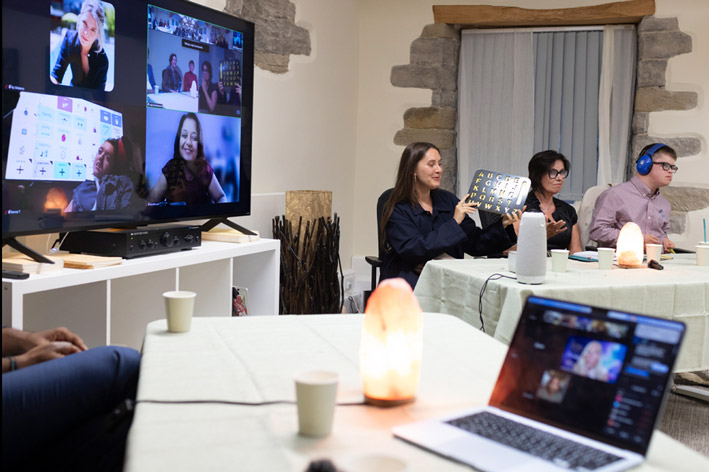
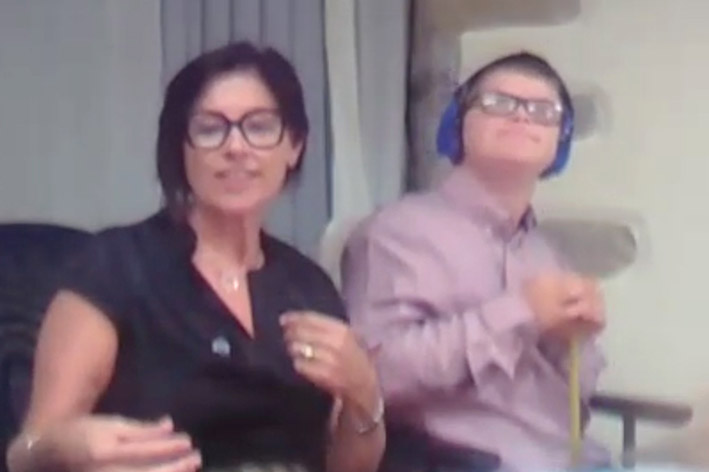
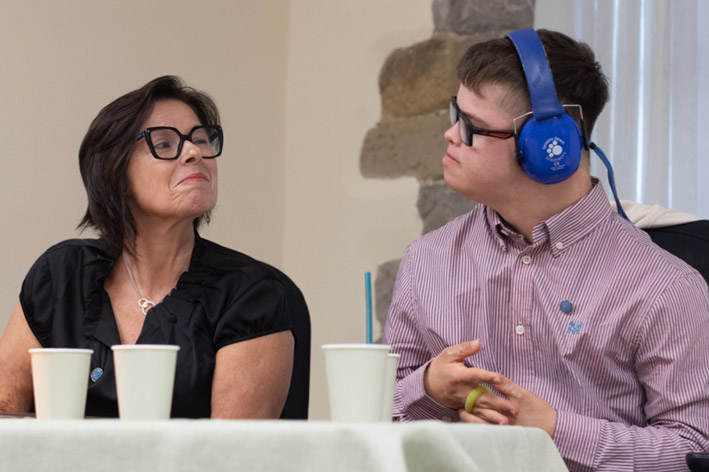
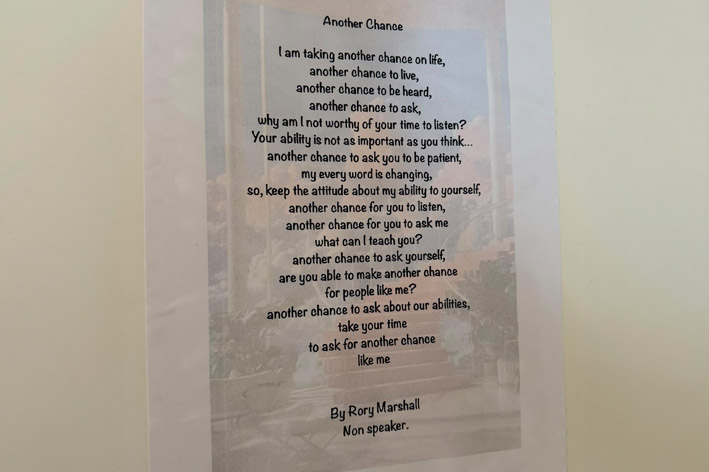
Also on the panel was Louise Bromfield of cocreatinginclusivity.org, and Rory Marshall, a non-speaker attending with his mother, Aine, and father, Greg, who also addressed Ky through a message he had composed beforehand using a letterboard.
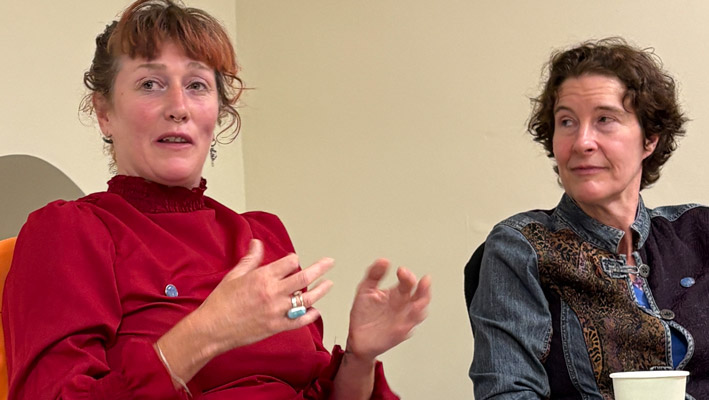
Sitting alongside Rory and his family, Natalia addressed one of the central controversies surrounding spelling boards: why does another person sometimes need to hold the letterboard or act as a communication and regulation partner?
Her response was that communication does not necessarily have to mean complete physical independence. Non-speakers may require support in many aspects of life, including remembering to ‘be in their body’ when communicating with those around them. What matters, she suggested, is the depth of trust in that relationship and the ability of the communication partner to remain regulated and present.
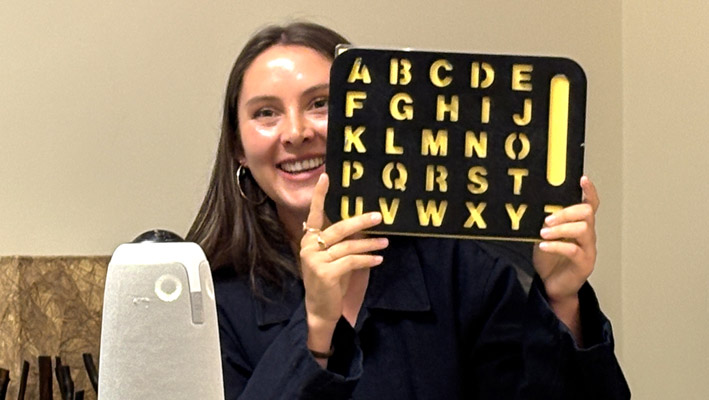
Sometimes, Natalia added, the most useful technology may also be the simplest. A letterboard is a perfect example of such technology.
We also heard from Manisha Lad Soma Rapid Prompting Method (RPM) level 2 certified, mother of Akhil – one of the non-speakers whose story has become closely associated with The Telepathy Tapes. She is also founder and executive director of Akhil Autism Foundation, a nonprofit organisation that funded the nonprofit centre The Sensory Pathway Centre.
Manisha described a journey stretching back to when Akhil began typing at around 11 years old using a method she knew was controversial. The family faced a fundamental decision: whether or not to believe that the words being produced genuinely represented Akhil.
Akhil, now 25 and minimally speaking, has subsequently completed 62 hours of college education and become an advocate for recognising different forms of communication.
Manisha also spoke openly about experiences she interprets as mind-to-mind communication between herself and Akhil. These are, for many, much stronger claims – but hearing them directly from a parent who has lived with these questions for years made them an important part of the discussion about how we think about communication itself – rather than something conceptual either simply dismissed or accepted.
Then came one of the most affecting contributions of the evening – Rory thanked Ky for helping give people like him a voice and specifically asked that non-speakers with Down’s Syndrome should not be forgotten. His wider message moved into much more unusual and affecting territory – speaking about angels, love and a role for non-speakers in changing the way we understand human connection.
Whatever interpretation one places upon those ideas, hearing them in the presence of Rory and his family was very different from encountering them in a podcast or on a discussion board. Rory’s message had taken around an hour to compose and received unilateral, emotional applause.
His parents also spoke movingly about how discovering his ability to communicate had changed their entire family.
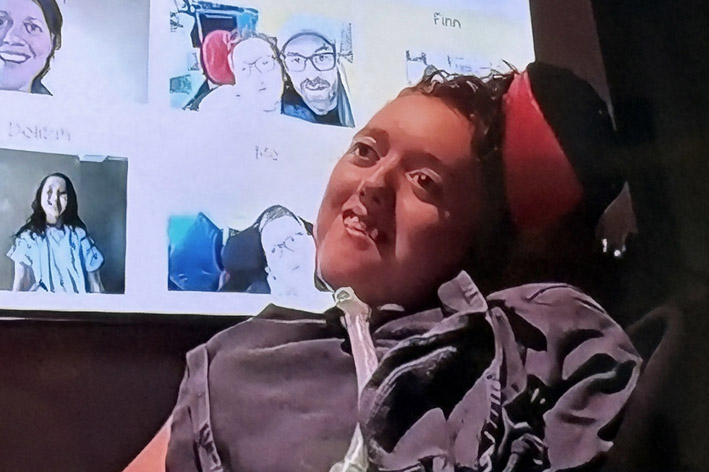
We heard from Sonny Thompson, another non-speaker joining remotely and communicating using eye-tracking technology. Sonny introduced plans for UNION – the United Non-Speakers Intelligence Oversight Network – intended to give non-speakers themselves a greater voice in the conversations and organisations developing around them.
The subsequent discussion ranged widely – from letterboards, eye-tracking and assistive technology to telepathy, consciousness, AI and the possibility that perhaps the challenge is about true communication that asks less of non-speakers adapting to us, and more of us learning to listen on their terms.
There were ideas and experiences shared during the evening that deserve serious investigation rather than easy acceptance or dismissal, often based upon theoretical assumptions and paradigmatic stalemate. It is a scientific duty to inquire deeply therein.
There was also something much harder to dispute: People who, for years, who have been treated as though very little was happening behind an uncooperative body are increasingly finding ways to tell us otherwise. The scientific questions surrounding how some of these communications are produced remain incredibly important, and so does listening to what is being said – about love, communication and what it means to be human.
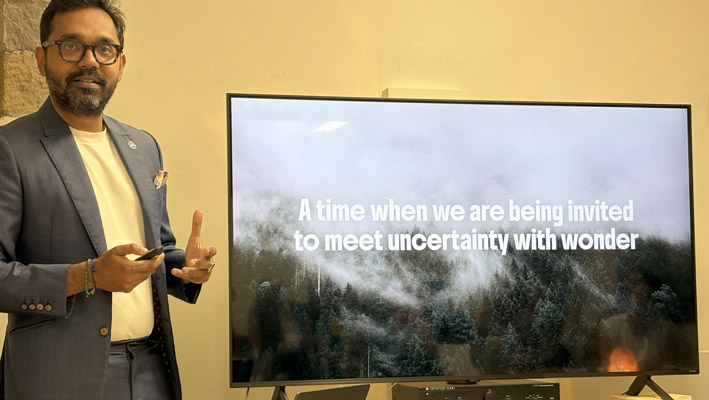
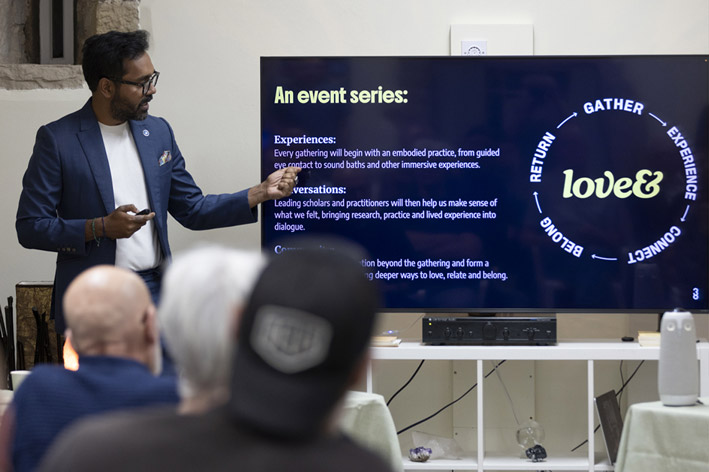
This theme of connection was wrapped up in Rohan Routroy’s concluding segment on an event series designed to spark a movement: LOVE&, a collaboration between Studio 38 and Applied Love Labs. LOVE& is a collective mission to reignite collective in-person authentic interconnectivity through further discussions on technology, science, art – and ultimately, unconditional love.
Our enormous thanks to Julia Mossbridge, Ky Dickens, Natalia Meehan, Manisha and Akhil Lad, Rory, Aine and Greg Marshall, Sonny Thompson and team, Louise Bromfield, Rohan Routroy, and to our hardworking ALL and CLS team – Courtney Hayden, Sophie Morrison, Gary Brown, Ally Dowsing-Reynolds and all those who contributed – and to Broughton Sanctuary for their co-sponsorship in helping us bring such a wonderful group of people together, marking a frontier conversation of depth.